Local SEO for Hotel and Restaurant Menus: Budva, Kotor, Tivat, and Prishtina
Most hospitality properties treat their menu as something guests see after they arrive. In practice, a meaningful share of travelers research dining options before booking or before leaving their room — which means a menu that only exists as a printed card or a flat PDF is invisible at exactly the moment it could influence a booking decision. This is a natural follow-on to our guide on language priority for Balkan menus: once your menu is multilingual, making it findable is the next step.
1. Why Your Menu Affects Whether Guests Find You at All
A PDF menu uploaded to a website is rarely crawlable in any useful way — search engines struggle to index text inside a PDF with the same reliability as a proper web page, and a scanned or image-based menu is effectively invisible to search entirely. A menu published as real, indexable text — the way a QR menu system structures it — gives a property an additional surface in search results beyond the homepage and the booking listing.
2. How Tourists Actually Search in This Region
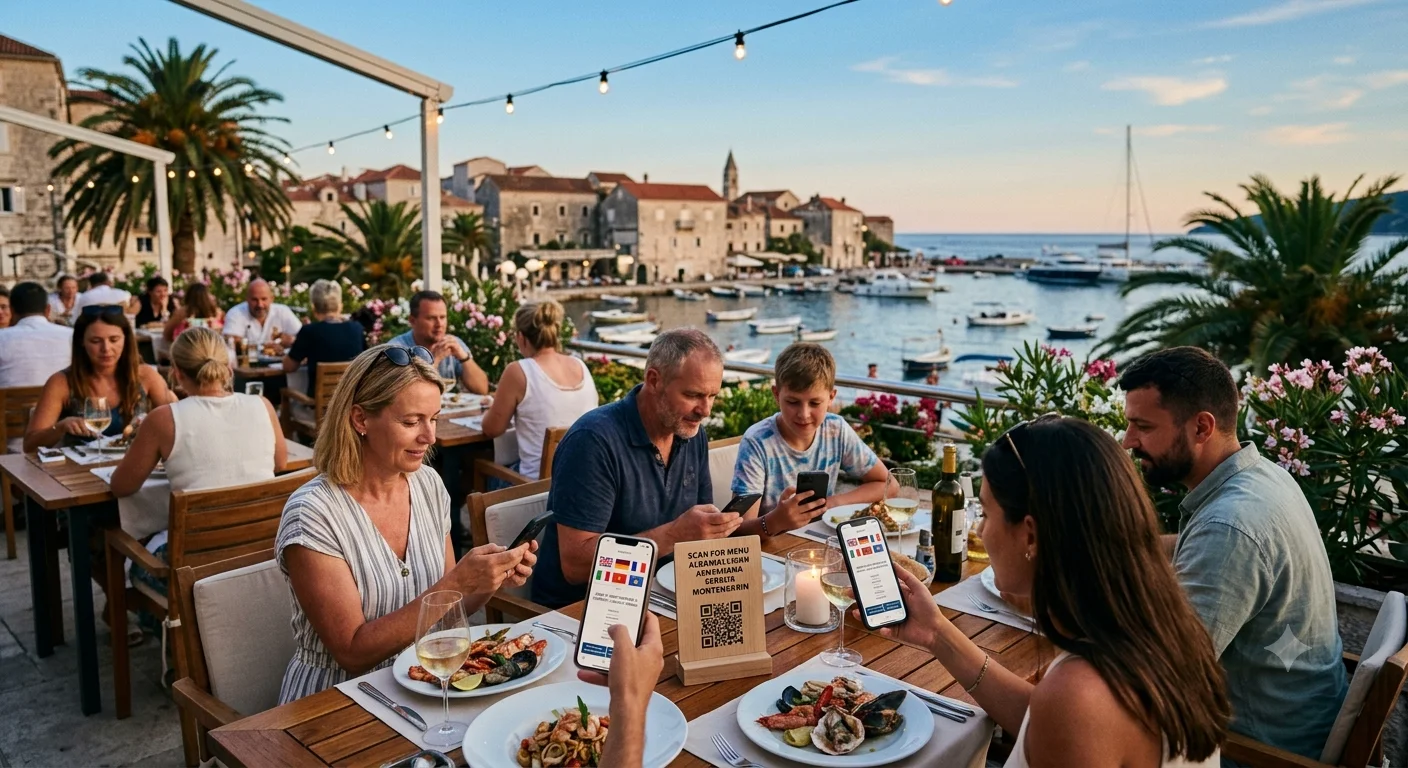
Adriatic coast searches lean heavily on combinations of place name plus cuisine or meal type — "restaurant Kotor old town", "Budva beach bar menu", "Tivat seafood dinner" — often performed on mobile, often the same day or within a day or two of arrival. Kosovo's pattern in Prishtina is similar but skews toward "near me" searches once a visitor is already in the city center, since the urban dining scene is dense and walkable. In both cases, the search happens close to the moment of decision, which rewards properties with genuinely indexed, current menu content over those relying on word of mouth or a static PDF.
3. City-by-City Notes
Budva has the region's highest density of beach bars and seasonal restaurants — competition for visibility is intense, and a property's menu freshness (a beach bar that still lists last year's prices loses trust fast) matters more here than almost anywhere else on the coast.
Kotor draws a heritage and cruise-passenger crowd inside the old town walls, where dining decisions are often made on foot within a short radius — multilingual clarity (particularly for the cruise-ship demographic) matters more than aggressive pricing visibility.
Tivat centers heavily on the Porto Montenegro marina and a yacht-charter clientele with different expectations and search behavior than the rest of the coast — English and Italian content quality tends to matter disproportionately here.
Prishtina has a fast-growing café and restaurant scene aimed as much at the local diaspora-return market as at international visitors, with "near me" mobile search behavior dominating over the seasonal coastal pattern seen in Montenegro.
4. Make Sure Your Menu Is Actually Indexable
A few basics make the difference between a menu search engines can use and one they cannot: serve menu content as real HTML text rather than an embedded PDF or image, give each menu page a clear, descriptive title and meta description rather than a generic one shared across the whole site, and keep the page reachable through a normal link from your homepage rather than only accessible via a QR scan. A QR code should be a convenience for in-person guests, not the only path to the content.
5. Connecting Your Menu to Google Business Profile
Google Business Profile allows a direct menu link, and keeping that link pointed at your live, current menu — rather than a PDF uploaded once and forgotten — means price changes and seasonal menu swaps stay accurate everywhere a guest might check, not just on your own site. This is also where the setup work from our Montenegro and Kosovo QR menu guide pays off twice — once for the in-person guest experience, and again for anyone researching the property beforehand.
Conclusion
In a region where dining decisions are often made within a day of arrival and searched on a phone, a menu that exists only as a printed card or a static PDF is a missed opportunity. Treating the menu as real, indexable, current content — tailored to how guests actually search in Budva, Kotor, Tivat, or Prishtina — turns it into part of a property's visibility, not just a detail guests find after they have already booked.