QR Menu for Hotels in Albania and Croatia: Expanding the Adriatic Hospitality Guide
Our Montenegro and Kosovo QR menu guide covers the properties where we already see consistent position 1 organic performance. Albania and Croatia represent the next natural expansion of the same Adriatic hospitality corridor — different guest mixes, different language priorities, but the same core operational challenge: serving a genuinely international room in a property that cannot afford to print five separate menu versions.
Albania: The Fast-Growing Case
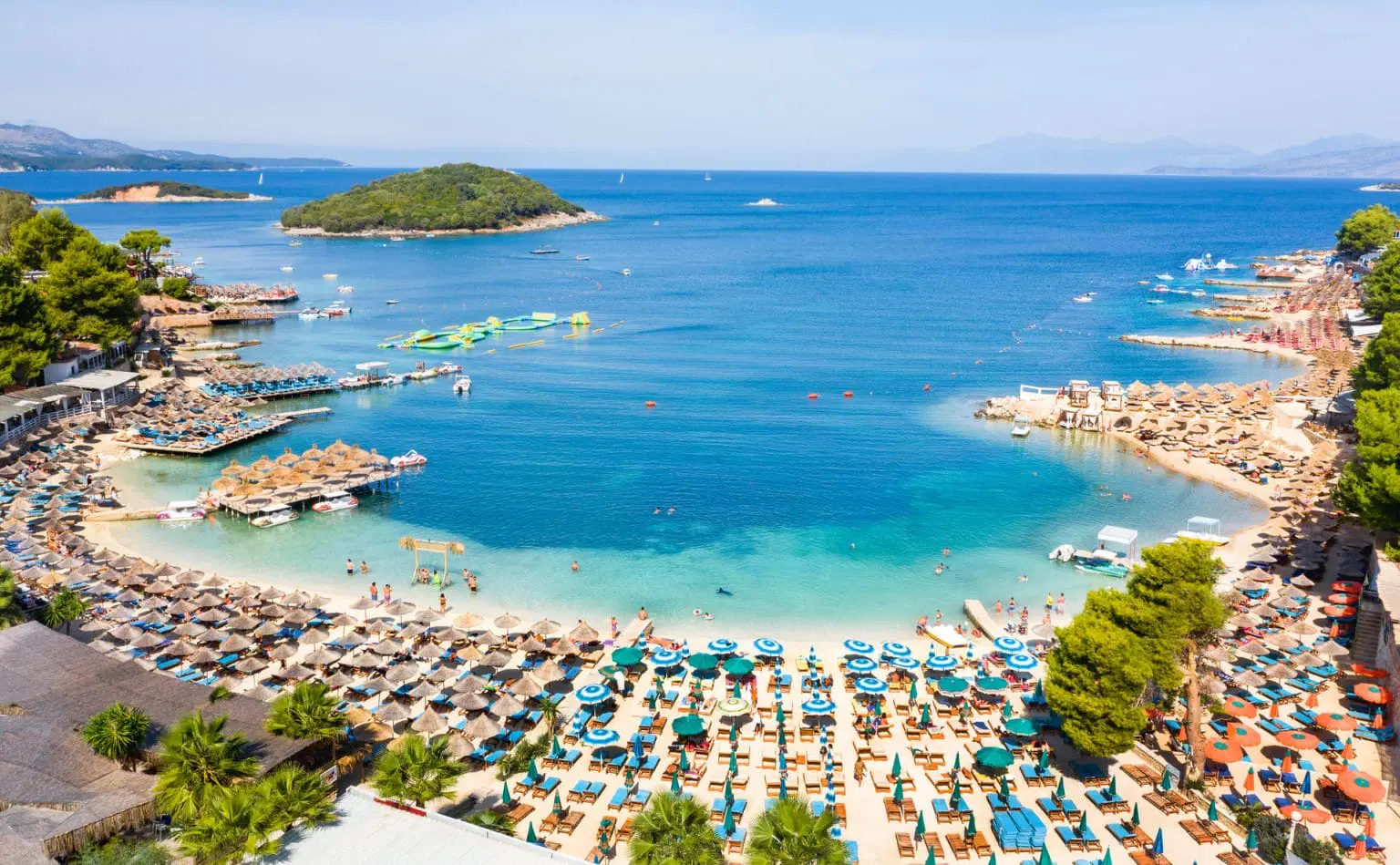
Albania's tourism sector has grown sharply over the past three years, concentrated on the Riviera — Saranda, Ksamil, Himara, Vlora — and increasingly in Tirana for city breaks and transit stays. The guest profile is more mixed than its neighbors: a strong Albanian diaspora returning from Italy, Germany, Switzerland, and the UK sits alongside Italian beach tourists, Balkan regional travelers, and a growing number of British and Scandinavian visitors discovering the coast.
The practical language priority for most Albanian coastal properties is: Albanian, English, Italian, German. Properties in Tirana add Turkish as a meaningful fifth given the city's increasing role in regional business travel. The Balkan hospitality language priority guide covers how to sequence these additions based on actual booking data rather than assumptions.
Croatia: The Established Market with the Same Problem
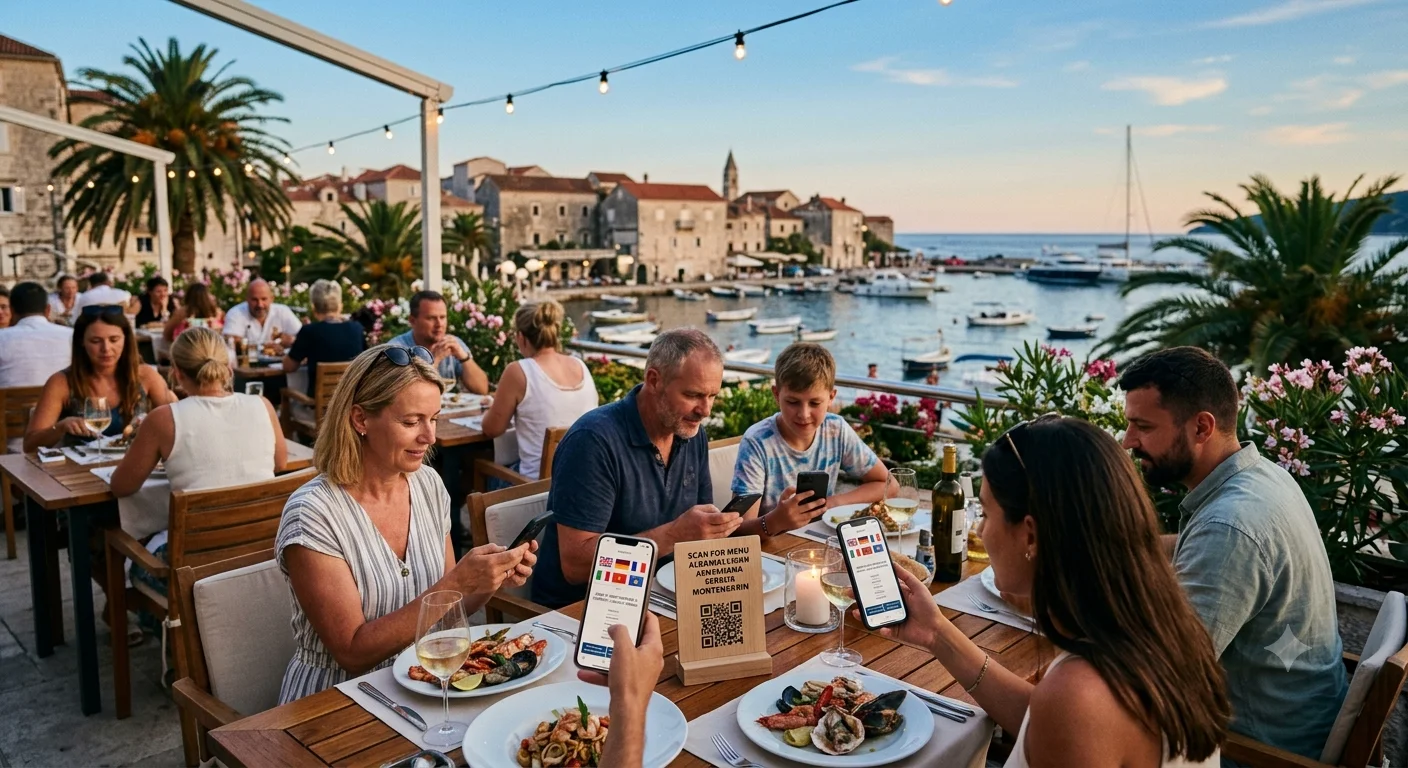
Croatia's Adriatic coast — Dubrovnik, Split, Hvar, Rovinj — is one of Europe's most competitive hospitality markets. Properties there are operationally sophisticated, but the printed menu problem persists precisely because the guest mix is so diverse: German, British, Italian, American, and regional Balkan guests, often in the same property in the same week, at sharply different price points depending on the season.
For Croatian properties, English and German form the base, with Italian as a strong third for properties near the Istrian coast or Dubrovnik's cruise-ship traffic. Croatian is assumed, but the hospitality industry standard in Croatia is to serve international guests entirely in English — which means a Croatian-only printed menu is not functional for a meaningful share of covers, particularly in peak July and August.
Seasonal Setup for Adriatic Properties
Both Albania and Croatia operate on sharply seasonal calendars — coastal properties may run at near-zero occupancy in winter and full capacity in July and August, with a shoulder season that is increasingly meaningful as both destinations develop year-round appeal. A digital menu system handles this directly: seasonal menu sections activate and deactivate automatically by date, and price adjustments for peak weeks take minutes rather than requiring a reprint. This is the same setup covered in the local SEO guide for the Montenegrin and Kosovar market — the operational principle is identical across the corridor.
Language Notes for Each Market
Albania's situation is distinctive in one specific way: Albanian-speaking guests from the diaspora — particularly the Italian and German-resident communities — often prefer their diaspora language over Albanian when reading a menu. This means a property in Saranda serving primarily Albanian-Italians may find Italian outperforming Albanian in actual language selections on the digital menu. The menu platform's analytics show which languages guests actually select — launch with Albanian and English, then expand based on real scan data rather than assumed preferences.
Croatia's situation is the reverse: Croatian guests reading in Croatian is a given, but the international majority in peak season makes English the effective primary language for a coastal restaurant or hotel. A digital menu that defaults to English with a visible Croatian toggle handles this cleanly — the same automatic detection logic that works in Montenegro and Kosovo applies here.
What the Adriatic Corridor Has in Common
Montenegro, Kosovo, Albania, and Croatia share three characteristics that make a multilingual QR menu system particularly well-suited to the region: a guest mix that changes week to week across the season, a hospitality supply dominated by small and mid-sized independent properties rather than large chains, and a summer season where operational speed matters more than almost anywhere in Europe. A menu change that takes a week through a print cycle can miss a peak weekend entirely. A digital update that takes five minutes misses nothing.
Conclusion
The Adriatic hospitality corridor from Croatia to Kosovo is one of Europe's most linguistically diverse tourism markets, served overwhelmingly by independent properties operating on tight seasonal timelines. The printed menu is a structural mismatch for this reality. A multilingual QR menu system that handles language detection, seasonal section management, and real-time updates from a single dashboard is the practical fit — not because it is technologically impressive, but because it matches how these properties actually operate.
👉 Discover the QR menu system for Adriatic hospitality properties