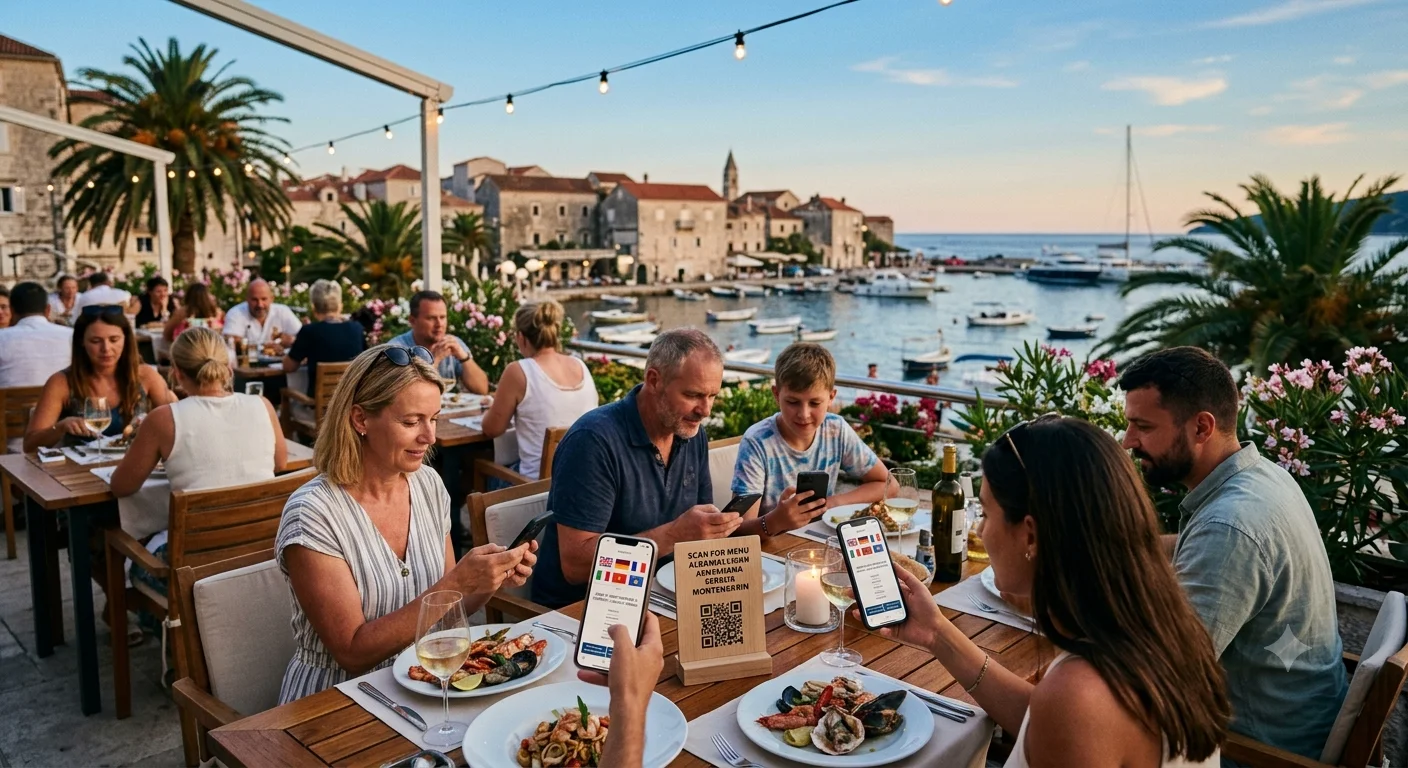
QR Menu for Hotels in Montenegro and Kosovo: A Multilingual Guide for Adriatic Properties
Montenegro's Adriatic coast and Kosovo's growing hospitality sector share a common challenge: a guest mix that changes by the week. A boutique hotel in Budva or Kotor might serve German and Russian guests in July, Serbian and Bosnian guests over a long weekend, and Turkish or Albanian travelers in the shoulder season. A printed menu in one or two languages cannot keep up — a QR menu can.
1. Who Is Actually Staying at Your Property
The region's tourism mix is unusually broad for its size. Montenegro's coastal towns draw heavy seasonal traffic from Germany, Russia, Serbia, Bosnia and Herzegovina, and increasingly the UK and Nordic countries, alongside a steady base of regional Balkan travelers. Kosovo's hospitality growth — concentrated in Prishtina and around Brezovica for winter tourism — leans more heavily on Albanian-speaking guests from the wider diaspora, alongside German, Swiss, and Turkish visitors.
This matters for menu design specifically: a guest who cannot read the dessert section does not ask for a translation, they simply do not order. The same upsell effect we cover in our multilingual room service guide applies directly here — language access is a revenue lever, not just a courtesy.
2. Which Languages to Prioritize
For most Montenegrin coastal properties, a practical starting set covers five languages: Montenegrin/Serbian, English, German, Russian, and Albanian. Properties closer to the Croatian border or with a strong cruise-ship clientele often add Italian. In Kosovo, Albanian and English form the base, with German and Turkish as the next priority depending on the property's typical booking sources.
You do not need all languages live on day one. A QR menu system lets you add a language in minutes rather than commissioning a full reprint — start with your top two or three guest nationalities by booking volume, and expand as you see which languages guests actually select.
3. Seasonal Setup Without the Reprint Cost
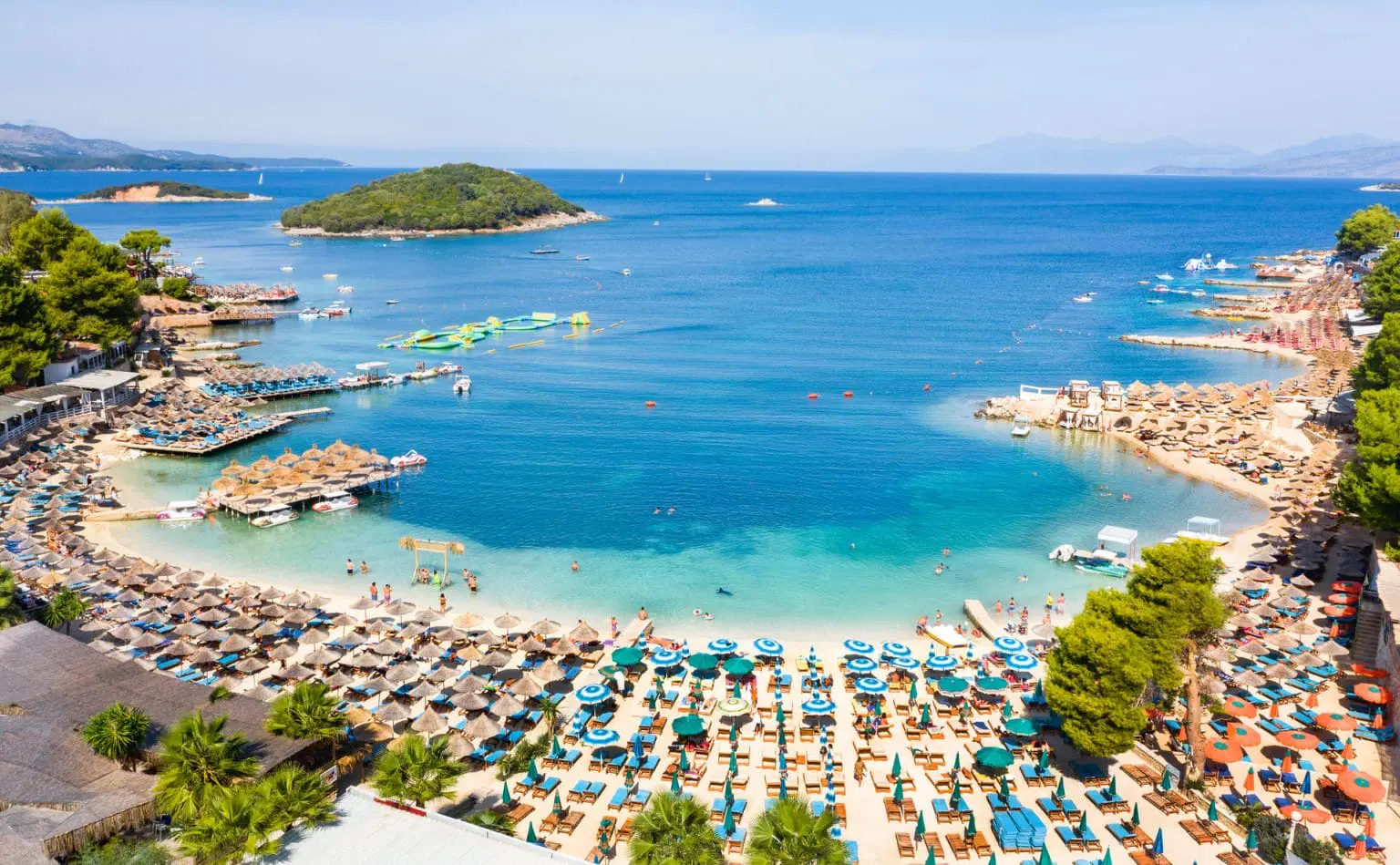
Coastal Montenegro runs on a sharp seasonal curve — a beach bar or pool restaurant in Tivat or Petrovac may operate a completely different menu in August than in May. Kosovo's ski season around Brezovica creates the same pattern in reverse. A printed menu forces you to either commit to one version for the whole season or absorb reprint costs every time the offering changes.
With a QR menu, swapping a summer cocktail list for a winter mulled wine menu, or adjusting prices for peak weeks, takes minutes and never requires a design file or a print run — the same flexibility covered in our real-time menu update guide.
4. Boutique Hotels and Guesthouses Are the Region's Backbone
Unlike markets dominated by large resort chains, much of Montenegro's and Kosovo's accommodation supply is small, family-run guesthouses and boutique hotels — often 10 to 30 rooms, with a single restaurant or breakfast room and limited back-office staff. This is exactly the profile where QR menus deliver the most relative value: no dedicated marketing department needed to manage translations, no minimum print run, and setup that a single owner-operator can manage from a phone. Our boutique hotel QR menu guide walks through a budget-conscious setup specifically for properties this size.
5. Local Search Visibility as a Side Benefit
A multilingual, mobile-first menu also strengthens how a property shows up for searches like "hotel Budva multilingual menu" or "Kotor restaurant QR menu" — guests increasingly research dining options before they arrive, and a property with a properly indexed digital menu has an additional surface area in search results that a PDF or printed-only menu simply does not.
Conclusion
Montenegro and Kosovo hospitality properties operate in one of Europe's most linguistically mixed tourism markets, on a sharply seasonal calendar, and largely through small independent operations. A QR menu system addresses all three constraints at once: multilingual access without reprint costs, seasonal flexibility, and a setup that fits a small team.